
Bridge the Gap Between Social Care Programs and Healthcare Systems
Most social care programs are doing meaningful work.
But when healthcare organizations ask how that work produces measurable outcomes, many programs struggle to explain it clearly.
We help social care programs make their impact legible to healthcare systems.
Most organizations come to us when they are preparing for:
• a healthcare partnership
• a grant proposal requiring outcomes
• a board presentation
• program expansion
Why programs seek this work
Many organizations spend months trying to answer questions like:
What population are we actually serving?
Which outcomes matter most?
When should impact be measured?
This engagement compresses that work into a clear, structured program model that leadership, funders, and healthcare partners can evaluate immediately.
We help social care programs turn meaningful work into something healthcare systems can fund, evaluate, and scale.
Quick test
If someone asked you tomorrow:
“How does your program actually produce measurable outcomes?”
Could you clearly explain:
who the program serves
what the program actually delivers
what outcomes should change
when those outcomes should appear
What healthcare partners need to see
Population → Intervention → Outcomes → Timeline
Quick Self Assessment
ElementQuestionPopulationWho exactly qualifies for the program?InterventionWhat does the program actually deliver?OutcomesWhat measurable results should change?TimelineWhen should those results appear?
Most programs can answer one or two of these questions.
Very few have all four clearly defined.
That’s the work this engagement does.
We help programs define the structure that connects population → intervention → outcomes → timeline so healthcare partners can clearly evaluate the program.
Most programs track activity.
Very few define the structure of impact.
Population
Intervention
What the program delivers
Outcomes
Who the program serves
What results should change
Timeline
When to measure impact
When this structure is unclear, programs struggle to explain their impact — even when the work is effective.
“We track a lot of activity, but our outcomes feel scattered.”
“Our board wants clearer metrics.”
“Healthcare partners keep asking for more data.”
“Our impact reports feel vague.”
“We know the program works, but we struggle to explain how.”
The problem usually isn’t the program.
Most social care programs are doing meaningful work.
The challenge is that healthcare systems require structured evaluation logic.
Programs often struggle because:
participant populations were never formally defined
outcomes were never prioritized
evaluation timelines were never specified
This engagement simply clarifies that structure.
Health partner asks: “Can you show measurable outcomes?”
Grant proposal asks “Define your participant population.”
Board asks “How do we know the program works?”
You ask “What outcomes should we track?”
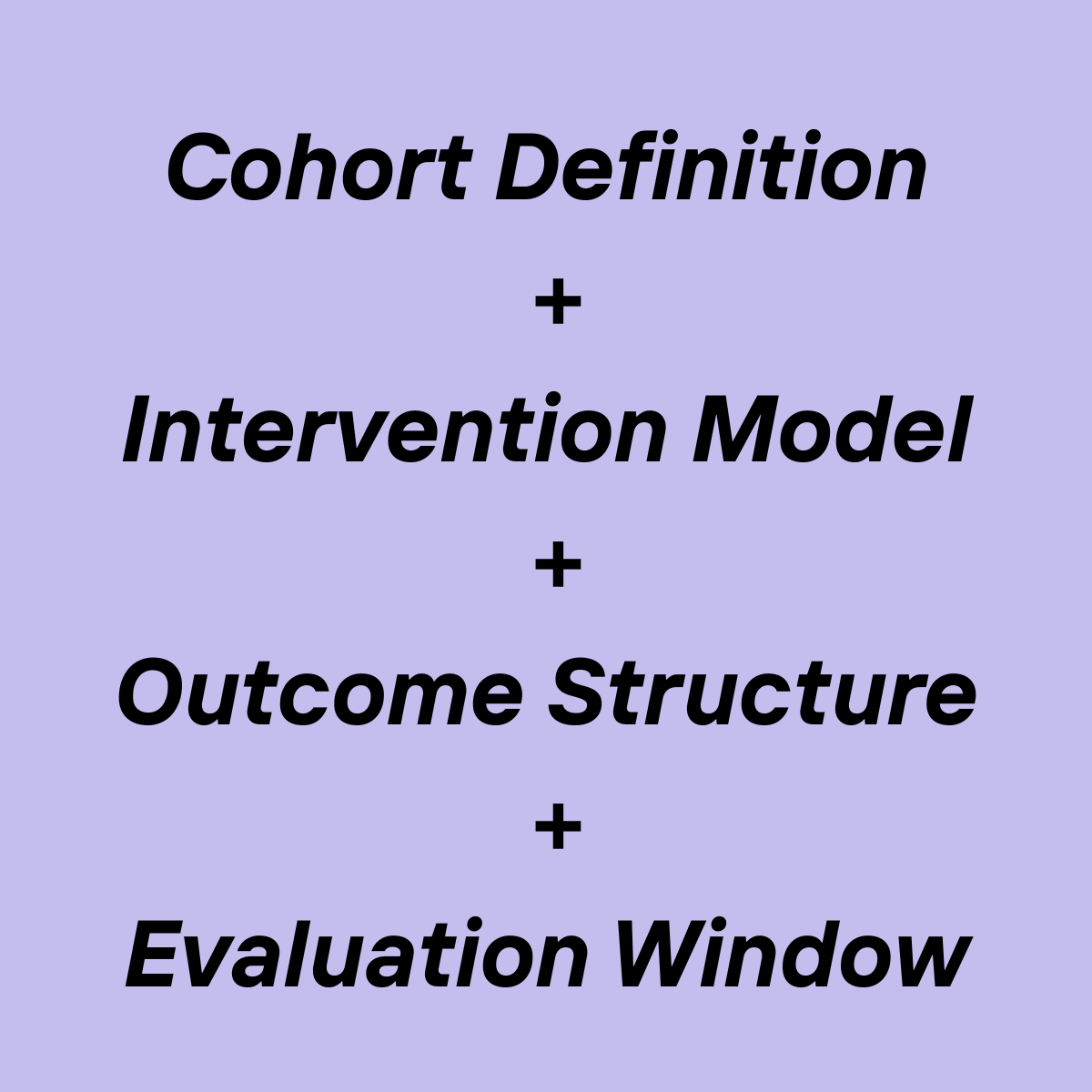
Save months of confusion and unlock partnerships.
This engagement structures your program so outcomes can be measured clearly.
Clear population and eligibility logic.
Participant Cohort Definition
Identify measurable program outcomes.
Outcome Structure
Define realistic measurement windows.
Evaluation Timeline
Intervention Logic
Clarify how program activities produce outcomes.
Executive Summary
A document explaining the program structure for leadership.
From scattered metrics, vague outcomes, confusing impact reports to clear population definition, measurable outcomes, and a framework for structured evaluateion
Built from real analysis of the social care market

This approach comes from Christina Rodriguez’s work publishing analysis through Pull, where she examines how social care programs succeed — and fail — when working with healthcare systems.
Through this work she has studied:
why programs struggle to demonstrate outcomes
how healthcare systems evaluate social care interventions
why strong programs often fail to translate their impact
This engagement brings those insights directly into your program design.
credibility with funders
clarity for leadership
a program structure that can scale
legitimacy with healthcare partners
saving months of confusion
enabling partnerships
unlocking funding
Why programs invest in this work
Organizations often spend months trying to answer questions like:
What population are we actually serving?
Which outcomes matter most?
When should impact be measured?
This engagement compresses that work into a clear program model leadership and partners can evaluate immediately.
Impact Structure Snapshot
Start with the snapshot
Answer four quick questions about your program.
This helps determine whether:
• your program is ready for impact model structuring
• this engagement would be useful for your situation